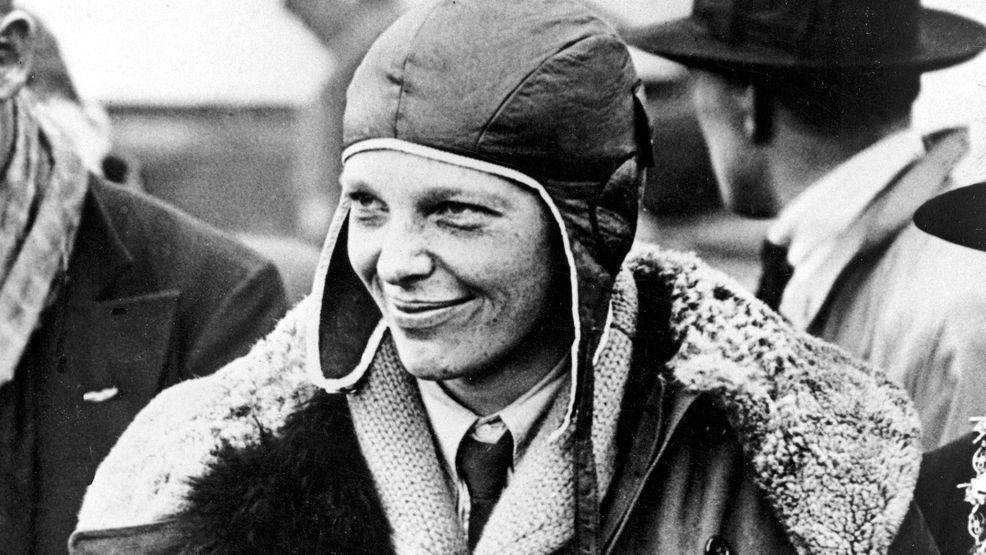

Nearly nine decades after Amelia Earhart vanished over the Pacific Ocean, a pilot believes he may have uncovered new clues to one of aviation’s greatest mysteries—without ever leaving his computer.
Justin Myers, a pilot and aviation enthusiast, says he may have spotted what appears to be wreckage from Earhart’s Lockheed 10-E Electra using satellite imagery on Google Earth. His discovery, he claims, could point to the final resting place of the pioneering aviator’s aircraft near Nikumaroro Island, a remote coral atoll roughly 1,000 miles northeast of Fiji.
Earhart and her navigator, Fred Noonan, disappeared in 1937 while attempting to become the first team to circumnavigate the globe by air. Despite decades of searches and countless theories, no confirmed trace of their plane has ever been found.
Myers told Popular Mechanics that his search began after watching a National Geographic documentary about Earhart’s final flight. Curious, he decided to analyze satellite images of the region where many experts believe the plane may have gone down. “I tried to think like a pilot—if I were in their position, low on fuel and lost, where would I try to land?” he said.
While scanning the island, Myers noticed what he described as a “dark, straight object” partially buried in sand—something that looked distinctly man-made. Upon closer inspection, he identified what could be a section of fuselage, a radial engine, and even a wheel, all appearing to match the proportions of Earhart’s aircraft.
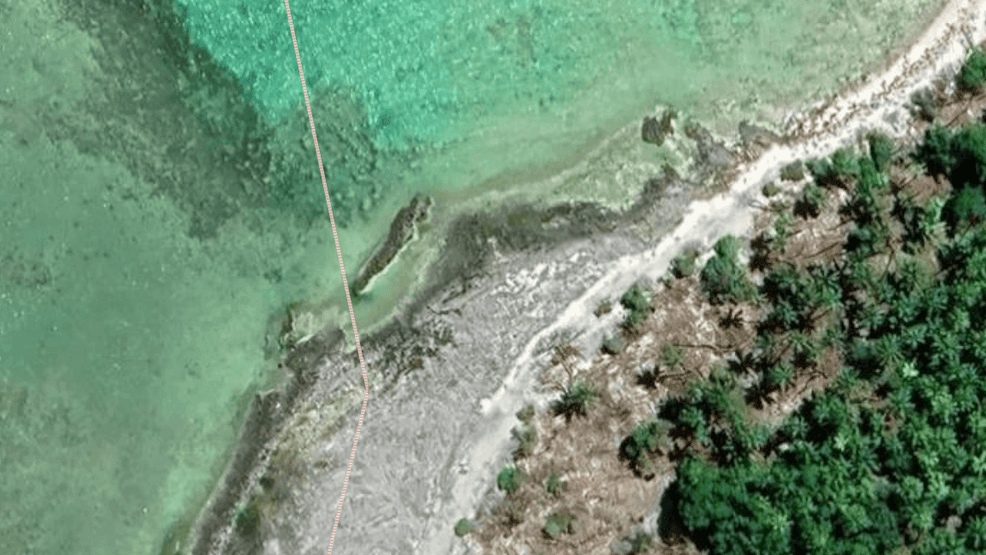
“The shapes and measurements were too precise to ignore,” Myers wrote in a blog post detailing his findings. “It looked like debris from a vintage aircraft that’s been hidden for decades.”
He has since submitted his findings to the Australian Transport Safety Bureau for review. Though Myers acknowledges that his discovery may not definitively solve the mystery, he’s convinced the objects he found are not natural formations.
Whether this new lead will finally reveal what happened to Amelia Earhart remains to be seen—but for now, the legend of her final flight continues to inspire new searches, even from space.