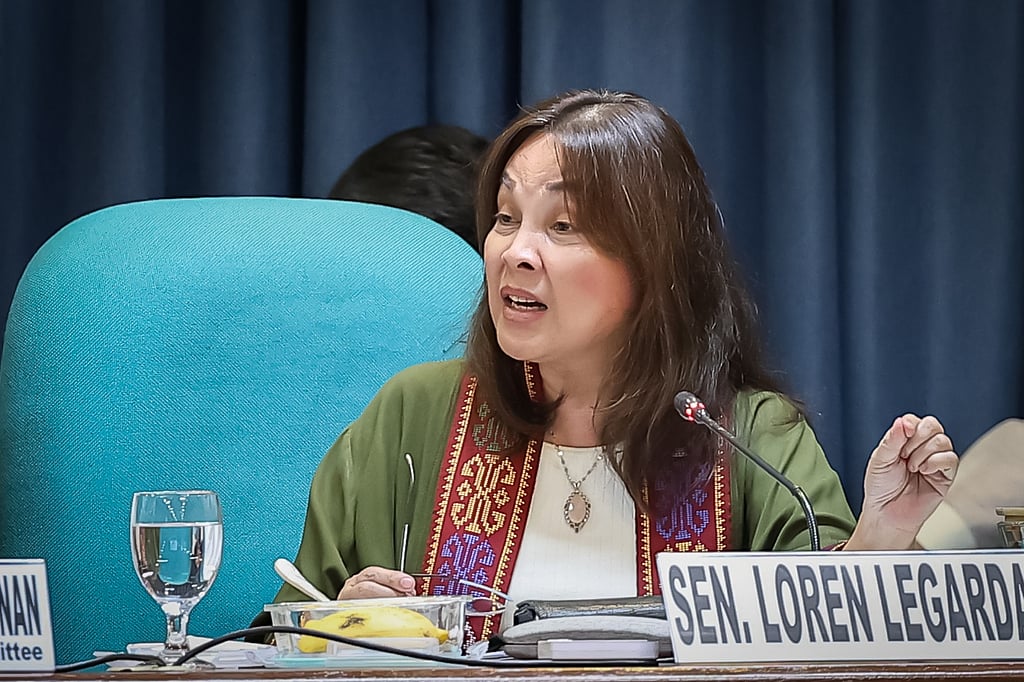

Senator Loren Legarda criticized Energy Secretary Sharon Garin on Tuesday for repeatedly denying that the Philippines is facing an oil crisis, despite the continued surge in fuel prices. Legarda warned that such denial could delay government action and worsen the impact of a looming fuel shortage.
Speaking during the first hearing of the Senate’s Proactive Response and Oversight for Timely and Effective Crisis Strategy (PROTECT) Committee, Legarda urged the government to acknowledge the crisis to prompt faster and more decisive measures. “Let’s not pretend there’s no crisis. Until we call it what it is, we won’t act quickly enough to protect our people,” she said.
Her remarks came after Palace Press Officer Claire Castro echoed Garin’s claim that the country’s fuel supply remains sufficient until early May. Garin has maintained that while global disruptions have pushed up prices, the Philippines still has enough reserves and does not yet need to impose fuel rationing.
Several senators, however, disagreed. Legarda, joined by Senators Win Gatchalian and JV Ejercito, argued that the Department of Energy (DOE) must stop downplaying the situation and admit that the country is already in crisis. They said such acknowledgment would compel agencies to act urgently, particularly in providing subsidies and cash aid to sectors hit hardest by rising fuel costs.
Legarda also expressed frustration over Garin’s late arrival at the hearing, suggesting that the Energy Secretary’s absence at the start reflected misplaced priorities. “If other Cabinet members can attend, why can’t the head of the most crucial department be here?” she asked. Garin later appeared after attending a meeting with President Ferdinand Marcos Jr. in Malacañang.
Gatchalian emphasized that the uncertainty of future oil shipments is enough to classify the situation as a crisis. “Even if we have stock now, if we don’t know when the next supply will come, that’s already a crisis,” he said.
DOE data as of March 20 showed that gasoline reserves could last about 53 days, diesel 46 days, kerosene 98 days, jet fuel 39 days, fuel oil 61 days, and LPG roughly 24 days.
President Marcos earlier confirmed that the government is seeking alternative fuel sources outside the Middle East, which currently supplies nearly all of the country’s crude oil. Foreign Affairs Secretary Ma. Theresa Lazaro said the Philippines is even considering importing from Russia, following temporary easing of U.S. sanctions on Russian oil.
Ejercito, meanwhile, criticized the administration for its slow response, saying the crisis committee formed only this week should have been established when tensions in the Middle East escalated in late February. He also urged the President to act swiftly on a bill granting him emergency powers to suspend or reduce fuel excise taxes to ease the burden on transport workers, farmers, and fisherfolk.
The measure, certified as urgent by Marcos, is still awaiting transmittal to Malacañang. Despite concerns over potential revenue losses of up to ₱136 billion, the President has signaled his intent to sign the bill, citing the need to cushion the public from rising fuel and commodity prices.