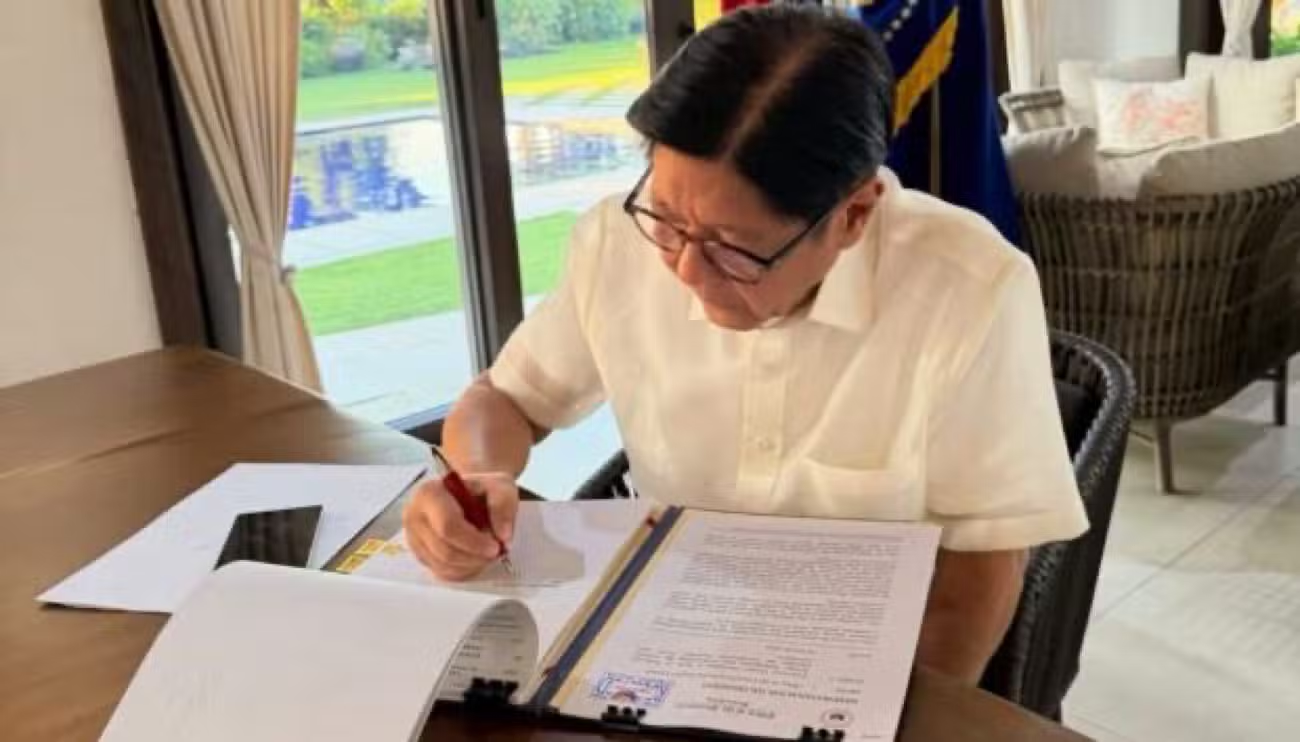

President Ferdinand Marcos Jr. has placed the Philippines under a state of national energy emergency, citing the growing threat to the country’s fuel supply and energy stability caused by escalating tensions in the Middle East.
The declaration, issued through Executive Order (EO) No. 110 and released Tuesday evening, came a day after Palace officials downplayed the situation as a “price disruption” rather than a full-blown oil crisis.
According to the order, the move aims to safeguard the country’s energy security and ensure that essential services and economic activities continue despite global supply uncertainties. “A state of national energy emergency is hereby declared in light of the ongoing conflict in the Middle East and the resulting imminent danger posed upon the availability and stability of the country’s energy supply,” the EO stated.
To coordinate the government’s response, the administration introduced the Unified Package for Livelihoods, Industry, Food, and Transport (UPLIFT) — a comprehensive framework designed to stabilize domestic energy supply, protect vulnerable sectors, and maintain the flow of critical goods and services.
The UPLIFT Committee, chaired by the President, includes key Cabinet members such as the Executive Secretary and the heads of the Departments of Energy, Transportation, Social Welfare, Agriculture, Finance, Economy and Planning, and Budget. The Department of Economy, Planning, and Development will serve as the committee’s secretariat.
The committee’s responsibilities include monitoring the supply and distribution of fuel, food, and other essential goods; ensuring the continued operation of public utilities and transport systems; and developing long-term strategies to reduce petroleum consumption. It may also form subcommittees and enlist other agencies to support the implementation of the EO.
The Department of Energy (DOE) has been directed to take immediate steps to maintain energy stability, including enforcing conservation measures, preventing hoarding and profiteering, and implementing fuel optimization programs. The DOE may also mobilize the Philippine National Oil Company (PNOC) and its subsidiaries to help secure domestic fuel supplies.
Other agencies — including the Departments of Transportation, Social Welfare, Trade, Finance, and Budget, as well as the Philippine National Police and the Department of Migrant Workers — are tasked with carrying out measures to mitigate the effects of the energy crisis. Local governments and private sector partners are likewise urged to assist in implementing these efforts.
The state of national energy emergency will remain in effect for one year unless lifted or extended by the President.